How Small Senior Neighborhoods Empower Independence in Elderly Care
Business Name: BeeHive Homes Assisted Living
Address: 2395 H Rd, Grand Junction, CO 81505
Phone: (970) 628-3330
BeeHive Homes Assisted Living
At BeeHive Homes Assisted Living in Grand Junction, CO, we offer senior living and memory care services. Our residents enjoy an intimate facility with a team of expert caregivers who provide personalized care and support that enhances their lives. We focus on keeping residents as independent as possible, while meeting each individuals changing care needs, and host events and activities designed to meet their unique abilities and interests. We also specialize in memory care and respite care services. At BeeHive Homes, our care model is helping to reshape the expectations for senior care. Contact us today to learn more about our senior living home!
2395 H Rd, Grand Junction, CO 81505
Business Hours
The word "self-reliance" means something very various at 82 than it does at 32. It stops being about profession or travel, and begins being about really concrete questions: Can I shower securely? Who assists if I fall at night? Do I get to pick what I eat? Can I go outside when I want?
Over the past two decades working with households and older grownups, I have actually watched those concerns play out in living spaces, medical facility discharge workplaces, and care strategy conferences. Once again and again, I have actually seen smaller senior communities do something that larger settings battle with. They preserve a person's sense of self while still offering the structure and assistance of assisted living and other types of senior care.
This is not about boutique luxury. A few of the most empowering environments I have actually seen are modest, licensed homes with 8 or 12 locals, run by individuals who know every relative by name. Size alone is not magic, but it develops chances that are much more difficult to reproduce in a structure with 120 apartments.
This article takes a look at how and why small senior communities can support true independence in elderly care, where the benefits are genuine, and where families still require to be cautious.
What "self-reliance" in fact implies in later life
Families frequently call me saying, "We desire Mom to stay independent as long as possible." When we go into it, what they suggest splits into three layers.
First, there is practical self-reliance. Can she dress, move around the home, manage her medications, and utilize the bathroom without full hands-on help? Second, there is decision-making self-reliance. Does she still select her everyday routine, clothing, diet plan, and social life, even if she needs assistance performing those choices? Third, there is emotional self-reliance: the sensation of being a person who contributes and belongs, rather than a passive recipient of help.
Large senior care systems focus heavily on the very first layer, because it is simple to determine. The number of "activities of daily living" do we assist with? The number of falls did we avoid? Those metrics matter. However the other 2 layers are where lifestyle lives or dies.
Small senior neighborhoods, when they are run well, safeguard those second and 3rd layers in really useful ways.
The scale distinction: why small feels different
I often ask families to picture a common big-box assisted living building. Long carpeted halls. A main dining-room that appears like a hotel dining establishment. Activity calendars printed weeks beforehand. A nurse on one flooring, med techs dividing up their cart, caretakers working a corridor each.
Now photo a 10-bed residential home, or a 25-resident lodge-style neighborhood. Locals walk past the cooking area on the way to the garden. The caregiver cooking lunch likewise advises Mrs. Ellis about her afternoon physical therapy. The activities are not simply what is printed on a schedule, however what emerges from discussion at breakfast.
That difference in scale changes how independence can be supported in numerous ways.
In a smaller neighborhood, staff-to-resident ratios are typically lower, specifically throughout the day. It is not unusual to see 1 caretaker for 5 to 8 homeowners in awake hours, compared with ratios that can quickly extend to 1 to 12 or more in bigger structures. Ratios differ by state and provider, but the pattern corresponds: fewer locals per employee suggests staff can wait an extra 30 seconds while a resident battles with buttons, rather of stepping in just to keep the schedule moving.
Schedules themselves likewise shift. In a big assisted living facility, having 70 individuals concern breakfast requires stringent timing. If you let six individuals sleep late, the entire maker bogs down. In a 10-bed home, the "schedule" can flex without chaos. That permits specific waking times, slower mornings, and meaningful option about when to bathe or consume, all of which support a sense of autonomy.
Finally, familiarity develops quicker. In a small community, the day-shift caretaker normally understands that Mr. Patel will not take his pills till he has actually had his chai, or that Mrs. Lewis needs a brief walk before being in the dining-room. Preparing for those choices suggests personnel can weave support around an individual's existing regimens, instead of asking the resident to adapt to the facility's routines.
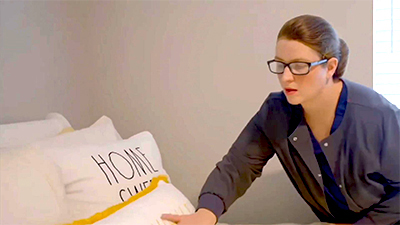
Assisted living in a small setting
Assisted living is a broad label. On paper, both a 120-apartment complex and an 8-bed residential care home might be accredited as assisted living in an offered state. From the resident's lived experience, they can feel like two different worlds.
In a smaller assisted living setting, fundamental supports like bathing, dressing, transfers, and medication management tend to take place in a more conversational, less rushed method. I keep in mind a resident, a retired mechanic called Costs, who moved from a big community to a small 14-bed home after repeated falls. In the larger setting, his early morning regimen was 15 minutes long because the personnel had to move down the hallway on a tight schedule. At the smaller home, the caretaker integrated in time to ask Expense about the old Chevy he when owned while helping him shave. The actual jobs were the very same. The distinction was pace and attention, that made Costs more going to try tasks himself rather of deferring whatever to staff.
Another benefit of small assisted living neighborhoods is environmental. Shorter ranges imply a resident with moderate mobility concerns can still browse from bed room to living space without a wheelchair. Fewer doors and intersections reduce confusion for individuals with early dementia, which can allow more independent roaming within safe boundaries.
There are compromises. Smaller neighborhoods generally can not use the exact same series of on-site facilities as a bigger building. You will not find a full gym, a movie theater, and 3 dining venues under one roof. Access to on-site physical treatment, lab draws, or visiting experts may depend upon outdoors companies can be found in on set days. For highly social, extroverted citizens who prosper on big group activities, a small home might feel too quiet.
What I tell families is this: assisted living is not a single item. It is a spectrum. Small senior neighborhoods sit on the end of that spectrum that prioritizes personalization over scale. They are particularly fit for older adults who value regular, familiarity, and one-to-one interaction more than having a long amenities list.
Independence within memory care
Dementia changes the self-reliance formula, but it does not erase it. People dealing with Alzheimer's disease or other dementias still have preferences, practices, and a core personality, even as their short-term memory fades.
Large, secured memory care units can supply a safe environment, however I have seen numerous locals become more passive just due to the fact that the environment is overstimulating. A lot of individuals, too much noise, and consistent personnel turnover can press somebody with dementia into withdrawal or agitation.
Small memory care communities, sometimes called "memory care homes" or "secured residential care homes," can better imitate a home environment. Homeowners see the very same personnel faces day after day, which decreases stress and anxiety. Personnel, in turn, find out each person's "tells" for pain much quicker. That suggests they can step in early with redirection or peace of mind, before habits escalates into screaming or wandering.
Interestingly, small settings can also enable more flexibility of movement within secured limits. A single-level home with a fenced garden and circular strolling course lets an individual with dementia walk independently without continuously being accompanied. In a huge, multi-corridor unit, staff might feel compelled to keep citizens closer to the nurses' station just to keep track of everyone, which shrinks the resident's series of motion.
However, smaller memory care programs are not immediately much better. Quality hinges on training and management. I have actually walked into tiny dementia homes where staff had little formal dementia training, relying rather on "what we have always done." In those settings, independence can be unintentionally curtailed by overprotection, such as not letting locals use utensils since of one previous occurrence, or doing all individual care tasks "for security" instead of grading assistance.
Families ought to ask extremely particular concerns about how a small memory care community balances safety and independence:
- How do you decide when to step in and when to let a resident try on their own?
- Can you provide an example of a resident who restored some capability after moving here?
- How do you handle homeowners who like to walk or pace?
The answers will inform you more than any brochure.
The role of respite care in supporting independence at home
Short-term respite care is one of the most underused tools in elderly care. Many family caregivers wait till they are on the edge of burnout to search for assistance, and already, every choice seems like defeat.
Respite care in a small senior community can serve 2 purposes. Initially, it offers the caretaker a break, which is the obvious function. Second, it silently expands the older grownup's world without forcing a long-term move.
Consider a daughter taking care of her father, who has moderate movement issues and mild cognitive problems. She wishes to keep him home, however she likewise frets about what would happen if she got ill or required surgery. Scheduling a week or more of respite care in a small assisted living home allows both of them to "test-drive" communal senior care in a low-pressure way.
Because the setting is small, staff can take note of the father's routines from day one. Where does he like to sit? Does he choose tea or coffee? Just how much cueing does he need to remember his walker? When the daughter returns, she often gets particular observations, such as "He can stroll to the bathroom individually in the evening if we leave the corridor light on" or "He did better with his medications when we switched to a tablet organizer with images instead of times."
Those information help maintain or perhaps increase his self-reliance in your home. Respite care ends up being not simply a break, however a source of data and strategies that can be transferred back into the home setting.
In bigger facilities, respite citizens can sometimes seem like "add-ons" to a system built around irreversible homeowners. In small communities, short-term visitors are normally simpler to incorporate, which lowers the sense of interruption and makes it more likely that respite will be utilized proactively, not as a last resort.
How small communities personalize daily life
True independence lives in the small, recurring choices of every day life, not simply in care strategies. This is where small communities often shine.
Meals are an obvious example. In lots of big assisted living communities, menus are set centrally, with restricted ability to deviate. There may be an "always readily available" menu, however kitchen area staff cook for lots or hundreds at the same time. In a small home with a working kitchen, meals can be adjusted in real time. If 3 homeowners all of a sudden decide they want oatmeal rather of scrambled eggs, that is manageable. If somebody has beehivehomes.com assisted living near me always consumed a late breakfast, staff can quickly accommodate without throwing off a business kitchen operation.
The exact same flexibility applies to activities. In a small senior care environment, Tuesday morning does not need to be "chair yoga" since the leaflet states so. If homeowners are more interested in tending the tomatoes that day, the team member leading activities can pivot. This fluidity helps homeowners feel they are forming their days, not just being slotted into pre-determined programs.
One of the more subtle advantages is how small neighborhoods manage "refusals." In a big center, if a resident consistently decreases group activities or showers, it is easy for personnel to record the refusal and proceed, particularly when time is tight. In a small home, personnel notification patterns faster and have more chance to try alternative approaches: altering the time, modifying the environment, or involving a various team member whom the resident trusts.
Over time, these micro-adjustments permit locals to participate more on their own terms, which maintains a sense of self-direction even when support requires grow.
Safety without overprotection
Families often feel torn between security and independence. They fear that a fall or medication error would be catastrophic, but they likewise do not want to see their loved one "covered in cotton wool."
In practice, overprotection can be simply as hazardous as underprotection. If every danger is removed, muscle strength decreases, self-confidence wears down, and the person can lose capabilities they might have kept for years.
Small communities, due to the fact that they have fewer locals to keep an eye on and a more intimate physical layout, are typically much better at practicing what geriatricians call "self-respect of danger." They can enable a resident to stroll in the garden unescorted, for example, because the garden is smaller, staff sightlines are good, and exits are managed. They can let a resident put their own coffee even if it in some cases spills, because a single dining room table is much easier to monitor and tidy than a large restaurant-style dining room.
At the same time, small size enables faster intervention when security truly is at stake. I have seen personnel in small neighborhoods catch early urinary tract infections just because they observe subtle habits modifications over breakfast in a group of 10 individuals, modifications that would easily be lost among sixty.
Independence here is not about letting individuals "do whatever they want." It is about matching support to real threat, not envisioned worst-case scenarios, and changing that balance continuously.
Family participation and transparency
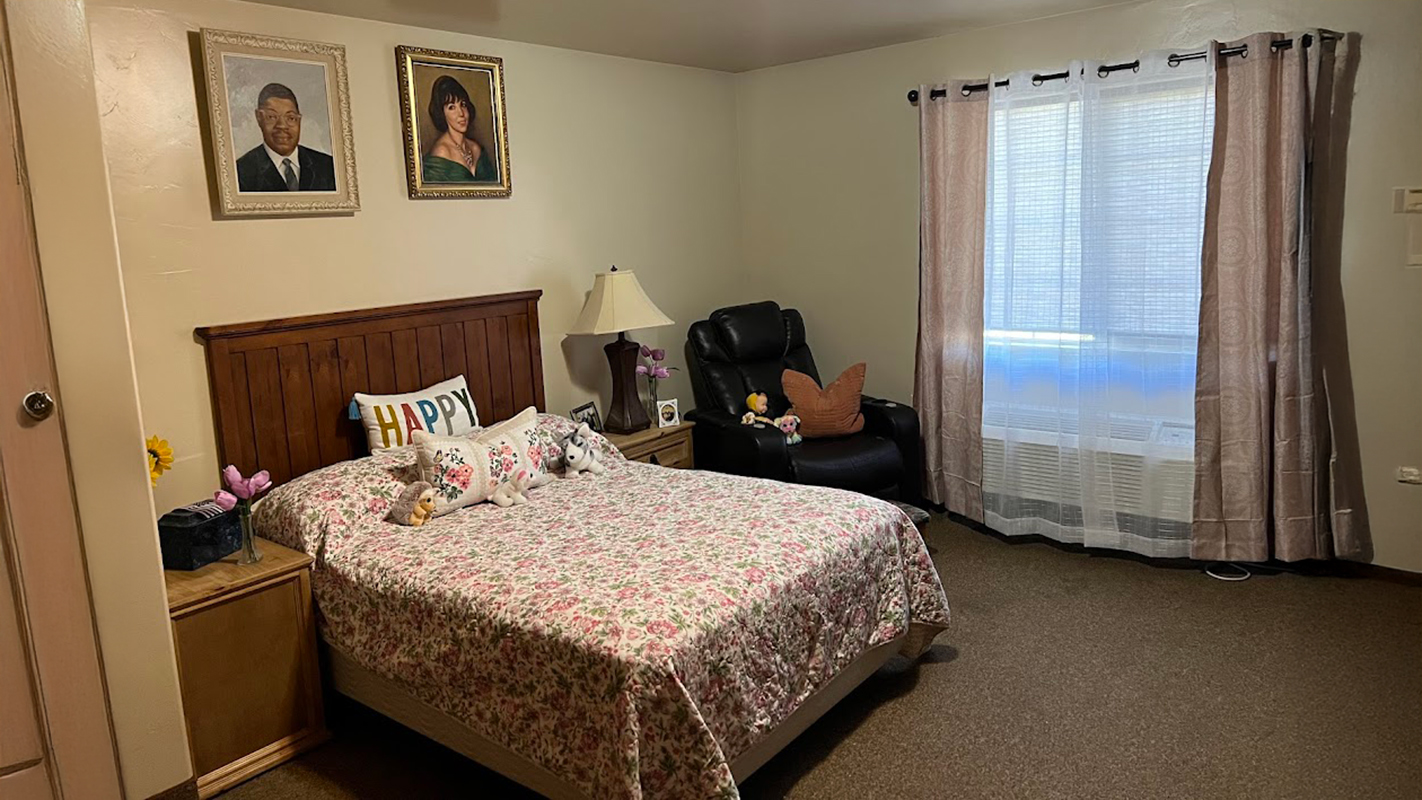
Families often tell me they feel more "in the loop" with smaller senior care companies. Part of this is just less layers. There is normally no complicated management hierarchy. The nurse or administrator you satisfy on the tour is the very same individual who will call you when your mother's cravings changes.
This direct contact makes it much easier to align on what independence indicates for a particular person. Expect a resident has actually constantly taken pride in ironing their own t-shirts. A small neighborhood can reasonably say, "We will establish the ironing board in the typical location two times a week and monitor from close-by." In a large structure with stringent housekeeping procedures, that demand may get lost or refused on liability grounds.
Because households are speaking straight with decision-makers, they can negotiate these compromises more concretely. I have actually sat at kitchen area tables in small homes going over whether Mr. Johnson can continue using his electric razor independently, under what conditions, and with what backup plan if his dementia worsens. That sort of nuanced, progressing contract is much harder to sustain when communication goes through several business channels.
Of course, the other side is that smaller operations differ more in elegance. Some do not use electronic health records or formal household portals. Interaction may rely greatly on phone calls and in-person visits. For some households, particularly those living at a range, this can be a drawback compared with the more systematized updates from a big provider.
When small is not the best fit
It is important not to glamorize small senior communities. They are not always the best answer.
A resident with very complicated medical requirements, such as frequent intravenous medications, vent care, or unstable heart conditions, may be better served in a nursing home or a hospital-based unit with on-site doctors and 24/7 signed up nurses. Many small assisted living or residential care homes are not geared up for that level of experienced nursing, and being sensible about this safeguards both the resident and the staff.
Similarly, some older grownups genuinely thrive on big crowds and a continuous stream of new faces. A previous instructor who always ran big class might choose the energy of a big assisted living facility, with multiple concurrent activities, a full lecture series, and lots of peers to fulfill. A 10-bed home may feel too small, like being "stuck at a dinner party that never ends," as one resident once told me.
Families likewise need to think about logistics. Small neighborhoods may be found in residential areas, which is charming for walks however can be inconvenient for public transport. Parking, going to hours, and access to nearby healthcare facilities need to factor into the choice. If the key household decision-maker lives 40 miles away and can just visit on weekends, a somewhat bigger community closer to their home might allow more consistent participation, which is itself a form of assistance for the resident's independence.
Finally, small companies, particularly stand-alone operations, can be more susceptible to ownership changes or monetary tension. Inquiring about licensing history, evaluation reports, and contingency strategies if the owner ends up being ill is not paranoia; it is due diligence.
Practical indications a small community genuinely supports independence
Families often ask how to inform whether a specific small neighborhood actually strolls the talk. Pamphlets and websites all assure "person-centered care" and "self-reliance."
Here are 5 extremely concrete signs I encourage individuals to look for during trips and discussions:
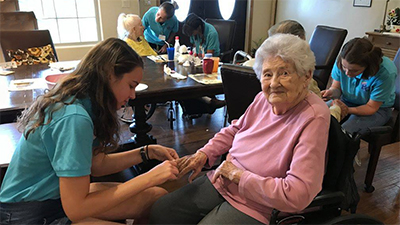
- Residents are doing things, not just being provided for. Try to find people putting their own drinks, folding laundry if they pick, or walking on their own, rather than everybody being parked in front of a television.
- Staff talk about people, not "our citizens" as a blob. When you inquire about somebody with dementia, do you hear, "He likes to speed after lunch, so we walk with him," or just, "He tends to wander"?
- Flexibility is visible in the environment. Inspect whether there are small seating locations for different preferences, not simply one huge space. Peek at the kitchen. Does it appear like an area where genuine cooking happens for a small group, or like a closed, commercial operation?
- The care strategy is referred to as changeable. Ask how frequently they adjust help levels and who is included. Good neighborhoods will talk about consistent small tweaks based on observation.
- Families can explain particular ways personnel honored their loved one's routines. If you meet another relative, ask what daily choice or routine the community has protected for their relative.
Independence in elderly care is not a slogan. It shows up in hundreds of tiny choices throughout the day. Small senior communities, by virtue of their scale and structure, are especially well fit to making those choices visible and negotiable.
Pulling it together: self-reliance as a shared project
When you strip away the marketing language, senior care is truly about negotiating change: modifications in health, in capabilities, in relationships and functions. Independence does not indicate resisting those modifications. It suggests taking part in them, rather than being brought along passively.
Small senior neighborhoods produce conditions that make such participation reasonable, for three primary factors. First, personnel know locals well enough to find both strengths and vulnerabilities. Second, regimens can flex without breaking the system. Third, communication lines in between homeowners, families, and personnel are shorter, so modifications can occur quickly.
Assisted living, respite care, and memory care all look various within that context. However the underlying dynamic is the very same: a shift from "care provided to a system" toward "assistance woven around an individual."
For families examining options, the crucial concern is not "Large or small?" in the abstract. It is, "In this particular place, with these particular people, how will my relative's options be respected, supported, and adjusted gradually?"
If a small senior neighborhood can address that plainly, back it up with daily practice, and remain sincere about when a higher level of care is required, it can end up being far more than a location to live. It can be the setting where self-reliance, in all its late-life forms, is not just preserved however sometimes rediscovered.
BeeHive Homes Assisted Living provides assisted living care
BeeHive Homes Assisted Living provides memory care services
BeeHive Homes Assisted Living provides respite care services
BeeHive Homes Assisted Living offers 24-hour support from professional caregivers
BeeHive Homes Assisted Living offers private bedrooms with private bathrooms
BeeHive Homes Assisted Living provides medication monitoring and documentation
BeeHive Homes Assisted Living serves dietitian-approved meals
BeeHive Homes Assisted Living provides housekeeping services
BeeHive Homes Assisted Living provides laundry services
BeeHive Homes Assisted Living offers community dining and social engagement activities
BeeHive Homes Assisted Living features life enrichment activities
BeeHive Homes Assisted Living supports personal care assistance during meals and daily routines
BeeHive Homes Assisted Living promotes frequent physical and mental exercise opportunities
BeeHive Homes Assisted Living provides a home-like residential environment
BeeHive Homes Assisted Living creates customized care plans as residents’ needs change
BeeHive Homes Assisted Living assesses individual resident care needs
BeeHive Homes Assisted Living accepts private pay and long-term care insurance
BeeHive Homes Assisted Living assists qualified veterans with Aid and Attendance benefits
BeeHive Homes Assisted Living encourages meaningful resident-to-staff relationships
BeeHive Homes Assisted Living delivers compassionate, attentive senior care focused on dignity and comfort
BeeHive Homes Assisted Living has a phone number of (970) 628-3330
BeeHive Homes Assisted Living has an address of 2395 H Rd, Grand Junction, CO 81505
BeeHive Homes Assisted Living has a website https://beehivehomes.com/locations/grand-junction/
BeeHive Homes Assisted Living has Google Maps listing https://maps.app.goo.gl/RUQvVGqDERBajnuR8
BeeHive Homes Assisted Living has Facebook page https://www.facebook.com/BeeHiveHomesOfGrandJunction/
BeeHive Homes Assisted Living won Top Assisted Living Homes 2025
BeeHive Homes Assisted Living earned Best Customer Service Award 2024
BeeHive Homes Assisted Living placed 1st for Senior Living Communities 2025
People Also Ask about BeeHive Homes Assisted Living
What is BeeHive Homes Assisted Living of Grand Junction monthly room rate?
At BeeHive Homes, we understand that each resident is unique. That is why we do a personalized evaluation for each resident to determine their level of care and support needed. During this evaluation, we will assess a residents current health to see how we can best meet their needs and we will continue to adjust and update their plan of care regularly based on their evolving needs
What type of services are provided to residents in BeeHive Homes in Grand Junction, CO?
Our team of compassionate caregivers support our residents with a wide range of activities of daily living. Depending on the unique needs, preferences and abilities of each resident, our caregivers and ready and able to help our beloved residents with showering, dressing, grooming, housekeeping, dining and more
Can we tour the BeeHive Homes of Grand Junction facility?
We would love to show you around our home and for you to see first-hand why our residents love living at BeeHive Homes. For an in-person tour , please call us today. We look forward to meeting you
What’s the difference between assisted living and respite care?
Assisted living is a long-term senior care option, providing daily support like meals, personal care, and medication assistance in a homelike setting. Respite care is short-term, offering the same services and comforts but for a temporary stay. It’s ideal for family caregivers who need a break or seniors recovering from surgery or illness.
Is BeeHive Homes of Grand Junction the right home for my loved one?
BeeHive Homes of Grand Junction is designed for seniors who value independence but need help with daily activities. With just 30 private rooms across two homes, we provide personalized attention in a smaller, family-style environment. Families appreciate our high caregiver-to-resident ratio, compassionate memory care, and the peace of mind that comes from knowing their loved one is safe and cared for
Where is BeeHive Homes Assisted Living of Grand Junction located?
BeeHive Homes Assisted Living of Grand Junction is conveniently located at 2395 H Rd, Grand Junction, CO 81505. You can easily find directions on Google Maps or call at (970) 628-3330 Monday through Sunday Open 24 hours
How can I contact BeeHive Homes Assisted Living of Grand Junction?
You can contact BeeHive Homes Assisted Living of Grand Junction by phone at: (970) 628-3330, visit their website at https://beehivehomes.com/locations/grand-junction, or connect on social media via Facebook
Residents may take a trip to the Colorado National Monument The Colorado National Monument offers scenic overlooks and accessible viewpoints that make it a rewarding outdoor destination for assisted living, memory care, senior care, elderly care, and respite care outings.